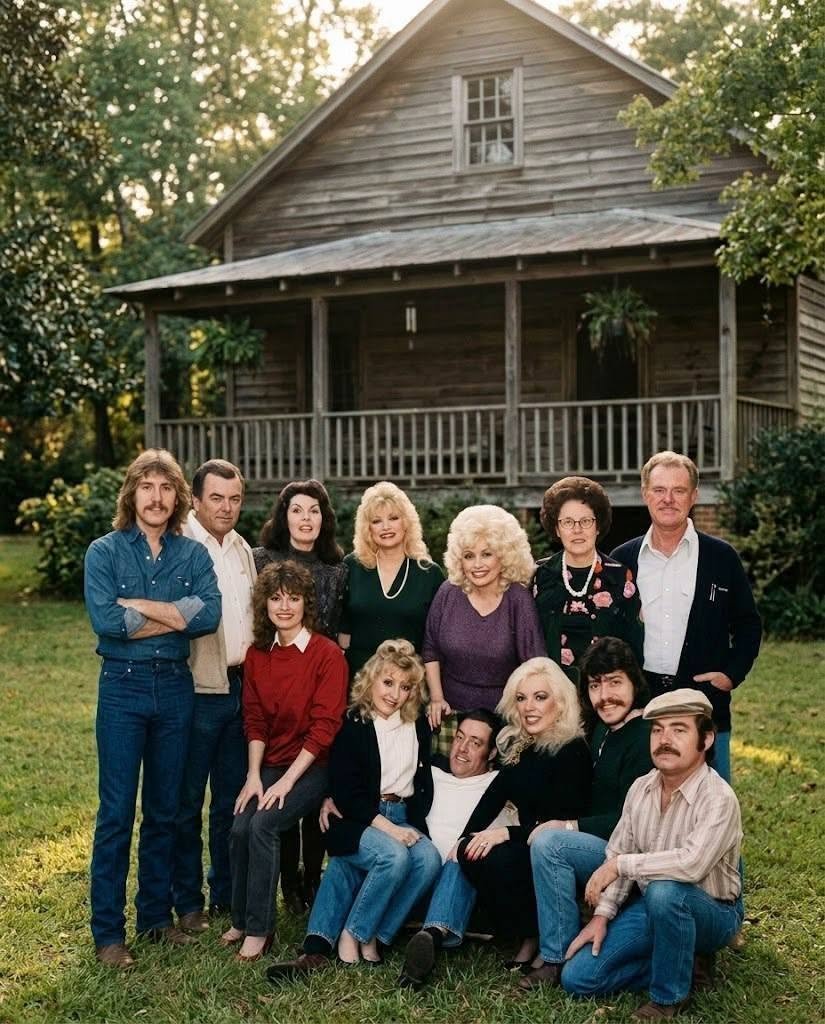
Before Dolly Parton became a worldwide icon with a voice recognized across generations, before the rhinestones, sold-out concerts, movies, and business empire, there was a small wooden cabin in the mountains of Tennessee.
Inside that cabin lived a woman whose name would never appear on concert posters but whose influence would echo through nearly every song Dolly ever wrote.
Her name was Avie Lee Parton.
She was a mother of twelve children, a mountain woman who spent her entire life carrying responsibilities that would have overwhelmed most people. Yet from that difficult existence came the lessons, emotions, and compassion that helped create one of the most beloved entertainers in history.
The world knows Dolly Parton as a superstar.
But Dolly has always known where her story truly began.
With her mother’s hands.
A Life Built Around Survival in the Great Smoky Mountains
Avie Lee Owens was born into the Appalachian mountains, where life was shaped by hard work, family, faith, and survival.
She married Robert Lee Parton when she was only fifteen years old.
Together, they built a family in a world where money was scarce and every meal required effort.
By the time Avie Lee was in her mid-thirties, she had given birth to twelve children.
The Parton family lived in a small one-room cabin on Locust Ridge in Sevier County, Tennessee. The home had no electricity and no modern conveniences that many people today consider essential.
There was no easy way to heat the house.
No washing machine.
No refrigerator.
No running water.
Almost everything required physical labor.
Water had to be carried.
Clothes had to be washed by hand.
Food had to be grown, preserved, and stretched as far as possible.
The cabin was small, but it held a large family held together by a mother who refused to let hardship destroy them.
The Invisible Labor of a Mountain Mother
Avie Lee’s days began before sunrise and often ended long after her children were asleep.
She cooked.
She cleaned.
She sewed clothing.
She cared for sick children.
She preserved food for winter.
She found ways to make limited resources last.
In Appalachian communities during that era, women like Avie Lee carried enormous responsibilities while receiving little recognition.
Their work rarely made headlines.
There were no awards.
No public praise.
No audience watching.
But without women like her, entire families would not have survived.
Dolly later reflected that her mother’s strength came from necessity.
Avie Lee did not have the luxury of giving up.
Twelve children depended on her.
The Songs That Filled a Poor Cabin With Music
Despite the exhaustion surrounding her life, Avie Lee carried something precious into that small cabin.
Music.
She sang old Appalachian ballads passed down through generations.
These were not polished performances.
They were songs born from hardship, faith, heartbreak, love, and survival.
While washing clothes or preparing meals, Avie Lee filled the cabin with melodies that connected her children to their heritage.
For young Dolly, those songs were more than entertainment.
They were lessons.
Her mother taught her that music could tell the truth about ordinary people.
It could express pain.
It could preserve memories.
It could make someone feel less alone.
Years later, many of Dolly Parton’s greatest songs carried that same emotional honesty.
Dolly Watched Her Mother Sacrifice Everything
One of the deepest influences on Dolly’s life was watching what motherhood cost her own mother.
Dolly saw a woman who loved her children completely but rarely had time for herself.
Avie Lee’s dreams were placed behind the needs of her family.
Her hands became worn from work.
Her body carried the consequences of years of pregnancies and labor.
Yet she continued.
She smiled.
She sang.
She created warmth inside a home where many people would have only seen poverty.
That image stayed with Dolly.
She understood that behind many families were women quietly sacrificing everything so their children could have a better future.
Why Dolly Chose a Different Path
Dolly Parton never had children of her own, a choice she has discussed openly over the years.
But motherhood remained central to her life.
She often described herself as a mother figure to many people.
The reason goes back to what she witnessed growing up.
She knew how difficult raising children could be.
She knew how much sacrifice it required.
And she understood that many children were born into circumstances where they needed support beyond their own homes.
Instead of becoming a mother to a few children, Dolly chose to invest in millions.
Turning Her Mother’s Struggle Into the Imagination Library
In 1995, Dolly Parton created the Imagination Library, a program inspired partly by her father’s inability to read and her family’s limited access to books.
But the emotional foundation also came from watching her mother fight for her children’s future.
Avie Lee may not have had formal education or financial resources, but she understood something powerful:
A child’s future begins with opportunity.
Dolly wanted children everywhere to have access to books regardless of their family’s income.
What began as a small program in Sevier County, Tennessee, grew into an international effort providing millions of books to children.
A woman who grew up in a cabin without many resources helped create a movement that placed books into the hands of children around the world.
The Legacy of a Woman Who Never Stood on Stage
Avie Lee Parton never performed in front of thousands of fans.
She never received the applause her daughter received.
But her influence reached every stage Dolly ever stood on.
Every song about struggling families.
Every project helping children.
Every moment Dolly defended ordinary people.
All of it carried pieces of the woman who raised her.
Dolly once described her parents as teaching her different kinds of intelligence.
Her father taught her practical wisdom and business instincts.
Her mother taught her compassion, creativity, and emotional understanding.
Together, they created the foundation of who Dolly became.
The Cabin Was Small, But the Dream Was Huge
The Locust Ridge cabin was only a tiny wooden home in the mountains.
But inside those walls, something extraordinary happened.
A mother with twelve children, little money, and endless responsibilities created an environment where imagination survived.
She gave her children stories.
She gave them songs.
She gave them love.
And one of those children carried those gifts far beyond the mountains.
The world knows Dolly Parton as a legend.
But before she belonged to millions of fans, she belonged to Avie Lee.
The woman who had tired hands.
The woman who sang while working.
The woman who showed her daughter that even the hardest life could still contain beauty.
And decades later, Dolly Parton continues proving that her mother’s greatest gift was never a song.
It was teaching her how to care for people.