songs change because someone rewrites them. This one changed without anyone touching a word. The melody stayed the same, and so did every line. What changed was the man singing it. He was no longer here.
A Song Born in Wartime
The song was written in 1939 by two British songwriters, Ross Parker and Hughie Charles. That was the year Britain went to war. Vera Lynn’s recording made it famous, and it became one of the voices of that whole era. Wives sang it, mothers sang it, and so did the young men who were heading off to places they could barely find on a map.
The idea is simple. Two people say goodbye. Neither knows where or when they’ll see each other again, but one of them promises that they will, on some bright day. In the meantime, the one staying behind should keep smiling until the clouds clear. The one leaving sends his greetings to the people back home, tells them he won’t be gone long, and wants them to know he was singing as he walked away.
For decades, people heard it as a soldier’s farewell, sung by someone who fully expected to come home.
The Song Johnny Cash Chose to End With
Johnny Cash didn’t write a single word of it. In 2002, though, he picked it on purpose.
He was working with producer Rick Rubin on American IV: The Man Comes Around, which came out on November 5, 2002. By then Johnny Cash’s health had been failing for years. Rick Rubin later said Johnny Cash believed this album would be his last, and that he wanted “We’ll Meet Again” to be the very last song on it.
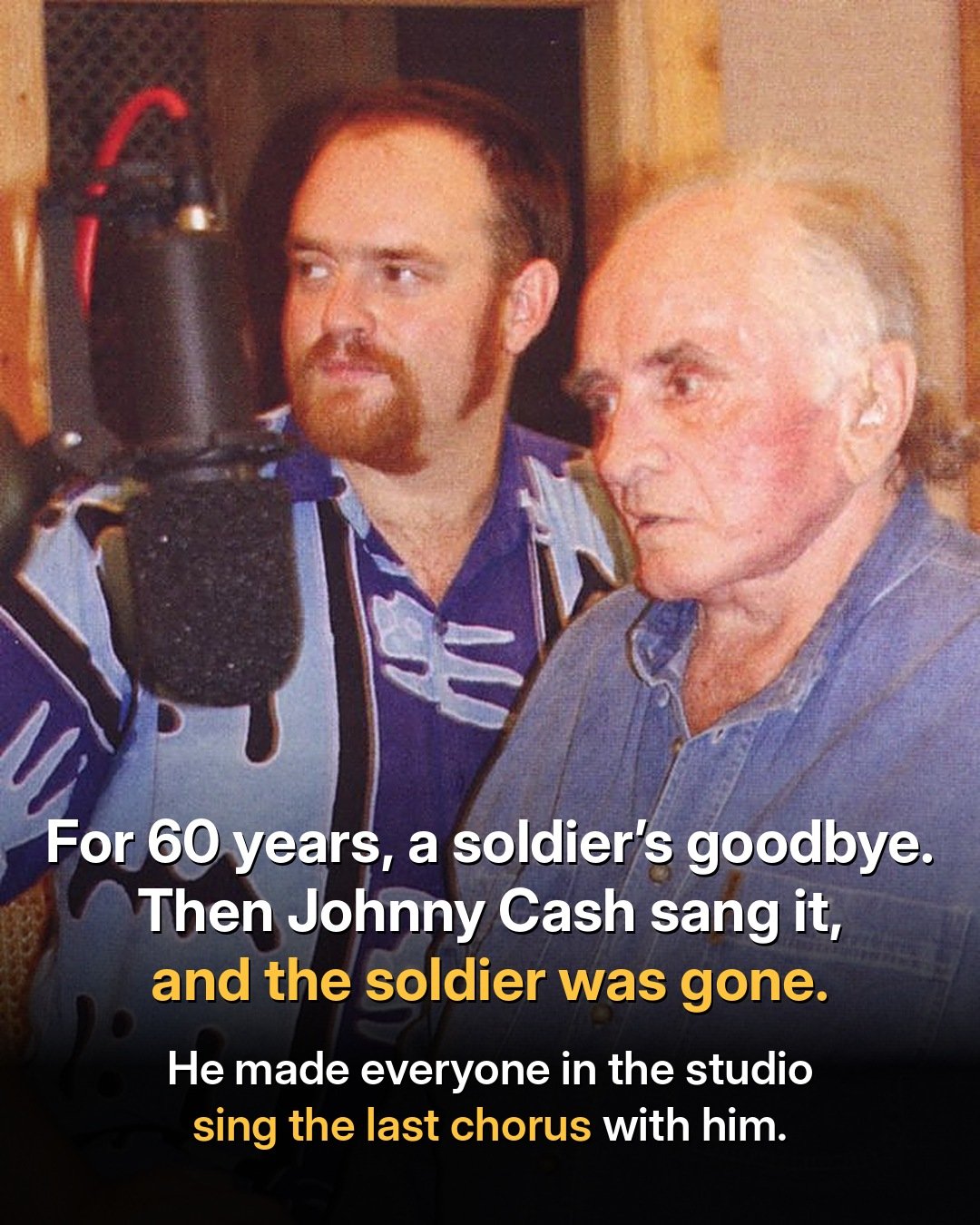
Then Johnny Cash did something unusual. When they recorded the song, he insisted that everybody in the studio sing along on the final chorus, engineers and musicians included, not only the hired singers. So the album doesn’t fade out on one voice. It ends with a room full of people singing together.
When the record came out, that closing track sounded warm, a little old-fashioned, almost cheerful. It was a classic tucked in at the end of a dark, heavy album.
Then Everything Shifted
In May 2003, June Carter Cash, his wife of 35 years, died. Four months later, on September 12, 2003, Johnny Cash died in Nashville. He was 71.
After that, the song couldn’t be heard the old way anymore.
The soldier in the lyrics was gone. The “where” no longer pointed to a battlefield, and the “when” no longer meant once the war was over. The man walking away and still singing was not some young recruit in 1939. He was the one whose voice was on the record.
Writers noticed right away. In one obituary written that autumn, the author quoted the song’s opening promise and then admitted, quietly, that he hoped it was true.
The Night the Room Sang It Back
On November 10, 2003, about two months after his death, friends, family and fellow musicians gathered at the Ryman Auditorium in Nashville for the Johnny Cash Memorial Tribute. For hours, artists from country and rock took turns performing his songs.
At the end, the Cash family stepped onto the stage, and the whole audience joined them in singing “We’ll Meet Again.”
It was the same thing Johnny Cash had asked for in the studio: everyone in the room singing the last chorus together. This time he wasn’t there to lead it.
He asked a room full of people to sing it with him. A few months later, a room full of people sang it for him.
A Footnote That Makes It Even More Human
American IV wasn’t actually the end. Johnny Cash kept recording in his final months, and more albums came out after his death. Rick Rubin said that once more songs were finished, Johnny Cash chose a different closer for the final record in the series, the Hawaiian farewell song “Aloha Oe.”
Even so, “We’ll Meet Again” was the last song on the last album released while he was alive. It was the goodbye he picked when he truly thought he was done.
The Song Didn’t Change. We Did.
Play it today and nothing in it is different. The guitar is the same, the shaky voice is the same, and the crowd still comes in on the final chorus. But it no longer sounds like a soldier promising to come home. It sounds like a man telling everyone he loved to keep smiling, because he would see them again someday.
Is there a song you can’t hear the same way anymore, because the person who sang it is gone?