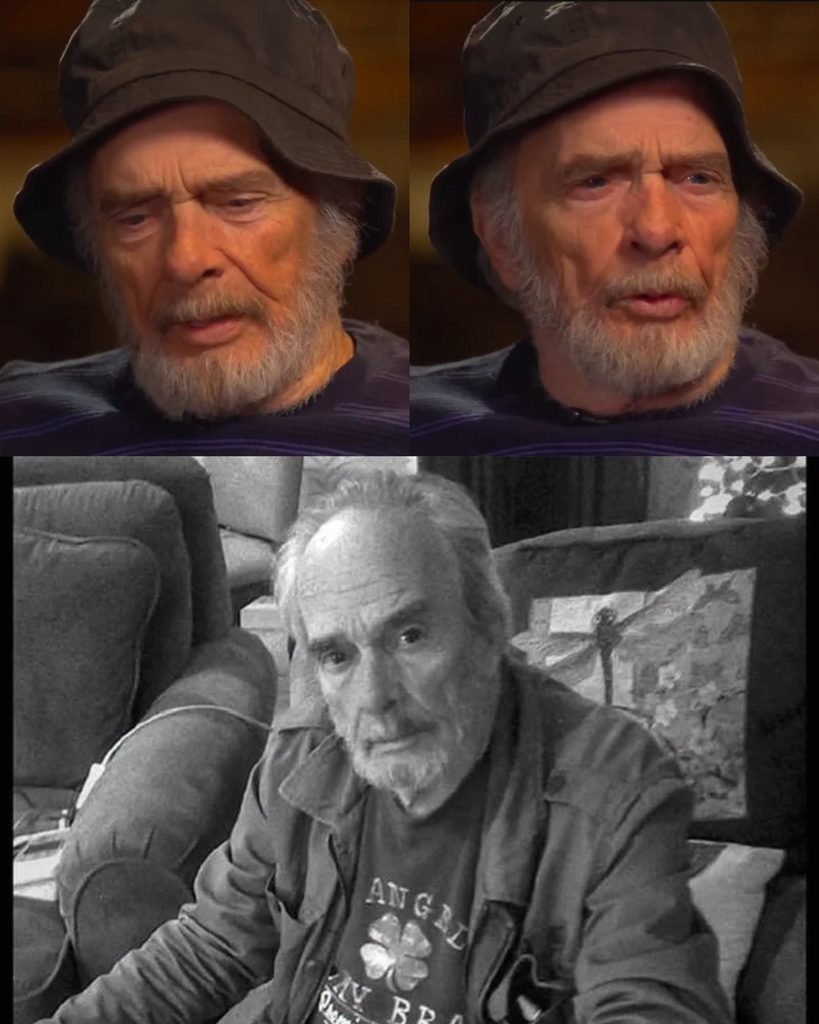
Merle Haggard was one of country music’s most respected legends, a man whose voice, songs, and unforgettable performances touched millions of hearts. With a career spanning decades, countless hit records, and a devoted fan base, he had achieved the kind of success most musicians could only dream of.
Yet, even at the age of 76, when many people would have been enjoying a quiet retirement, Merle was still traveling from city to city, climbing aboard his tour bus and performing in front of packed audiences.
When journalist Dan Rather asked him why he continued working so hard despite having nothing left to prove, Merle gave an answer that revealed a much more personal side of the country music legend.
“I’m scared of the loneliness.”
Those five words offered a glimpse into the private struggles of a man who had spent much of his life entertaining others but was still afraid of what might happen when the music finally stopped.
A Country Music Legend Who Refused to Slow Down
By September 2013, Merle Haggard had already built an extraordinary legacy. Known for classic songs such as Mama Tried, Okie from Muskogee, and The Fightin’ Side of Me, he had become one of the most influential voices in country music.
His songs connected with ordinary people because they often reflected real-life experiences, heartbreak, personal struggles, family, and the challenges of everyday life.
Despite his enormous success, Merle showed little interest in stepping away from the stage.
During his conversation with Dan Rather, filmed before a sold-out performance in Franklin, North Carolina, the singer explained why he continued touring even at an age when he could easily have chosen a more comfortable lifestyle.
The previous night, he had arrived from Ohio. After performing in North Carolina, his tour bus was scheduled to travel another 550 miles to Chester, West Virginia, where another audience would be waiting.
For many people, such a demanding schedule would have been exhausting. For Merle, however, continuing to perform was about much more than earning money or maintaining his career.
The Five Words That Revealed His Deepest Fear
When Dan Rather questioned why a legendary musician with decades of success still wanted to spend so much time on the road, Merle’s response was deeply revealing.
He admitted that he was afraid of loneliness.
The thought of suddenly stopping work, leaving behind the constant movement of touring, and spending long periods away from the people and activities that had defined his life seemed frightening to him.
Performing gave him something important to look forward to. It allowed him to remain connected with his audience, stay active, and continue doing something he genuinely loved.
For Merle, music was not simply a profession. It was part of his identity and a source of purpose.
He understood that retirement might mean more than putting away his guitar. It could also mean losing the daily connections, excitement, and sense of belonging that came with performing.
How Could a Man With Such a Large Family Feel Lonely?
Dan Rather then raised an interesting question.
Merle was not a man without family. He was married, had six children, and was surrounded by generations of grandchildren.
With so many loved ones in his life, why would someone like him still be frightened of loneliness?
It was a question that touched on something many people experience but rarely discuss openly.
Having a large family does not always mean someone feels emotionally connected all the time. A person can be surrounded by people and still worry about losing their sense of purpose, independence, or connection with the world.
Merle’s response reflected the difference between having loved ones and feeling truly connected to everyday life.
His family was undoubtedly an important part of his world, but performing gave him another kind of connection — one that came from sharing his music with people who had followed him throughout his career.
Music Was More Than a Career for Merle Haggard
For Merle, stepping away from music would have meant leaving behind something that had accompanied him through almost every stage of his life.
He had spent decades writing songs, recording albums, traveling, meeting fans, and performing on stages across the country.
Those experiences had become part of his everyday routine.
The excitement of a live audience, the sound of applause, and the opportunity to share his songs gave him a reason to keep moving forward.
His honesty also reminded people that even the most successful entertainers have private fears and emotional struggles. Fame, wealth, awards, and professional achievements cannot automatically protect someone from loneliness.
Sometimes, what keeps a person going is simply having something meaningful to do and people with whom to share it.
A Powerful Reminder About Loneliness and Growing Older
Merle Haggard’s words carried a message that reached far beyond the country music world.
As people grow older, their lives can change dramatically. Careers eventually come to an end, daily routines become different, and the social connections built over many years may become less frequent.
For some, retirement brings freedom and happiness. For others, it can create uncertainty and a feeling of being disconnected from the world they once knew.
Merle’s story showed why staying active, maintaining meaningful relationships, and continuing to pursue personal passions can matter so much.
At 76, he was still choosing the road, the music, and the audience over a quiet life away from the spotlight.
The Legacy of a Man Who Kept Singing
Merle Haggard passed away on April 6, 2016, leaving behind an extraordinary musical legacy and generations of fans who continue to appreciate his work.
His songs remain an important part of country music history, but his conversation with Dan Rather revealed something equally memorable about the man behind the music.
He was not simply chasing another performance or another standing ovation. He was holding on to the work, relationships, and experiences that made his life feel meaningful.
His five-word answer continues to resonate because it expresses a fear that many people understand but may find difficult to admit.
Sometimes, the strongest-looking people carry the quietest worries.
And sometimes, the reason someone refuses to stop working is not because they need more success, but because they are afraid of losing the connection that gives their life meaning.