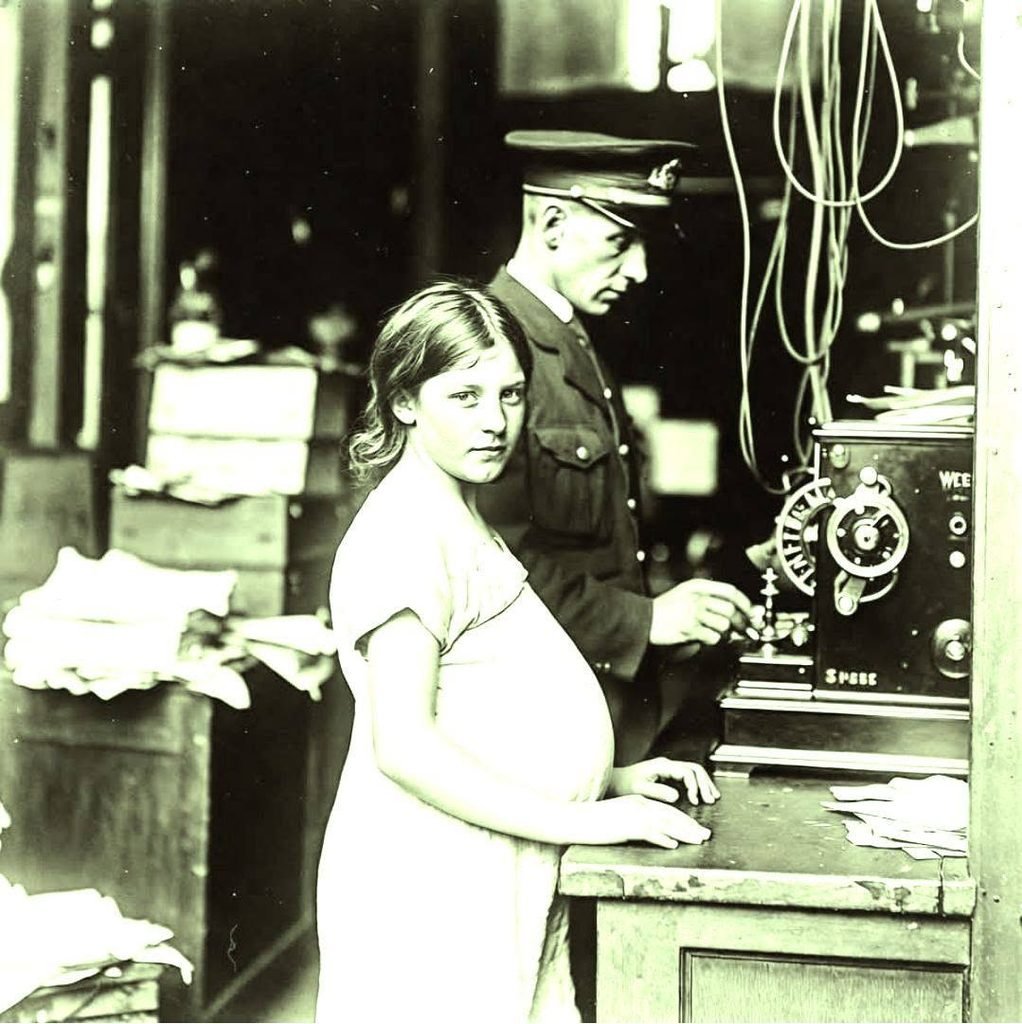
On December 3, 1921, a heartbreaking scene unfolded inside a Western Union telegraph office in Boston, Massachusetts. A thirteen-year-old girl named Maria Santos walked through the doors carrying a desperate secret.
Eight months pregnant, frightened, and seemingly without anyone willing to protect her, she had come to send a message asking for help.
What happened next would become an extraordinary story about courage, compassion, and one woman’s decision to refuse to look the other way.
Maria had reportedly been forced into a marriage with a much older man after her own father sold her. At just thirteen years old, she was facing a situation no child should ever have to experience. She knew she needed help, but reaching the right people seemed almost impossible.
She had no powerful connections, no influence, and no guarantee that anyone would listen to her story.
All she had was one urgent message.
A Desperate Girl Walked Into a Telegraph Office
Inside the office, Maria approached sixty-year-old telegraph operator Helen Walsh. She explained her situation and dictated a message describing what had happened to her.
For Helen, this was not an ordinary telegram.
As she listened to the young girl’s words, she understood the seriousness of the situation. Maria was a child in desperate need of protection, and simply sending her message to one person might not be enough.
Helen faced a decision.
She could send the telegram to its intended recipient and continue with her work, or she could take a much bigger step to make sure Maria’s situation received immediate attention.
She chose the second option.
One Woman Sent 47 Telegrams in Just 20 Minutes
Instead of sending a single telegram, Helen Walsh reportedly made an extraordinary decision. Within approximately twenty minutes, she transmitted forty-seven identical messages.
The telegrams were directed to newspapers, police departments, courts, and women’s advocacy organizations throughout Massachusetts.
Her reasoning was simple but powerful.
“One person might ignore a message. Forty-seven cannot.”
Helen understood that the more people who knew about Maria’s situation, the harder it would be for anyone to dismiss her desperate plea.
At a time when communication depended on telegraph wires, sending dozens of messages required effort, determination, and a willingness to take responsibility.
Helen was no longer simply transmitting words. She was helping a frightened child reach people who might be able to protect her.
The Telegraph Office Quickly Filled With People
The response was reportedly remarkable.
Within two hours, the previously quiet telegraph office began filling with people who had received the urgent message.
Reporters arrived looking for details. Detectives came to investigate. Court officials and representatives of women’s organizations also responded.
Maria was still there when many of them arrived.
For the first time, the young girl who had walked into the office feeling helpless was surrounded by adults who were paying attention to her situation.
Her story was no longer confined to one conversation behind a counter. It had reached newspapers, authorities, and organizations capable of taking action.
Helen’s decision to send the message to multiple destinations had brought attention to a situation that might otherwise have remained hidden.
Newspapers Brought Maria’s Story Into the Public Eye
By that evening, Maria’s story had reportedly appeared on the front pages of six newspapers.
The publicity placed enormous pressure on the authorities to investigate the circumstances surrounding her situation.
According to the account, police located and arrested her husband, Carlos Santos, at his workplace. Her father was also taken into custody shortly afterward.
The case moved quickly, with Carlos reportedly being denied bail.
Within nine days, he was convicted.
For Maria, the events marked a dramatic turning point. A young girl who had entered a telegraph office searching for someone to hear her had finally attracted the attention she desperately needed.
Helen Walsh Became the Woman Who Refused to Ignore a Child’s Plea
Helen Walsh’s role in the story was particularly remarkable because she could have treated Maria’s request as just another message to process.
Instead, she recognized that the situation required more than ordinary professional responsibility.
Her decision to send forty-seven telegrams demonstrated how one person can make a difference when they choose to act rather than remain silent.
The account says that Helen received praise from several organizations for her actions and was recognized for using the communication system to help protect a vulnerable child.
Her story offers a powerful reminder that sometimes the most important thing a person can do is simply listen and take someone’s suffering seriously.
Maria Santos Lived to Remember the Day Someone Finally Listened
According to the story, Maria went on to live a long life, passing away in 2004 at the age of ninety-one.
The experience of December 3, 1921, remained an important part of her personal story.
Years later, she reportedly reflected on the moment she entered the telegraph office and explained how one operator’s decision changed everything.
She remembered how Helen had sent her desperate message to newspapers, police departments, courts, and women’s organizations.
Within hours, people had arrived. By the evening, her story had reached the public, and the authorities had taken action.
The most meaningful part of her recollection was the recognition that one woman’s decision had given her a chance to be heard.
A Story About Courage, Compassion, and the Power of Speaking Up
The story of Maria Santos and Helen Walsh is a powerful reminder of the importance of protecting children and listening to people who are asking for help.
Maria was only thirteen years old. She should have been protected by the adults around her, yet she found herself having to seek help from strangers.
Helen, meanwhile, demonstrated that compassion is not always about making grand gestures. Sometimes it means recognizing an emergency, taking a risk, and doing everything possible to make sure someone receives help.
One young girl walked into a telegraph office with a desperate message. One older woman decided that message deserved to be heard far beyond the walls of that building.
And that decision became the heart of a story about the extraordinary difference one person can make.
Sometimes, saving a life begins with something as simple as refusing to ignore a cry for help.