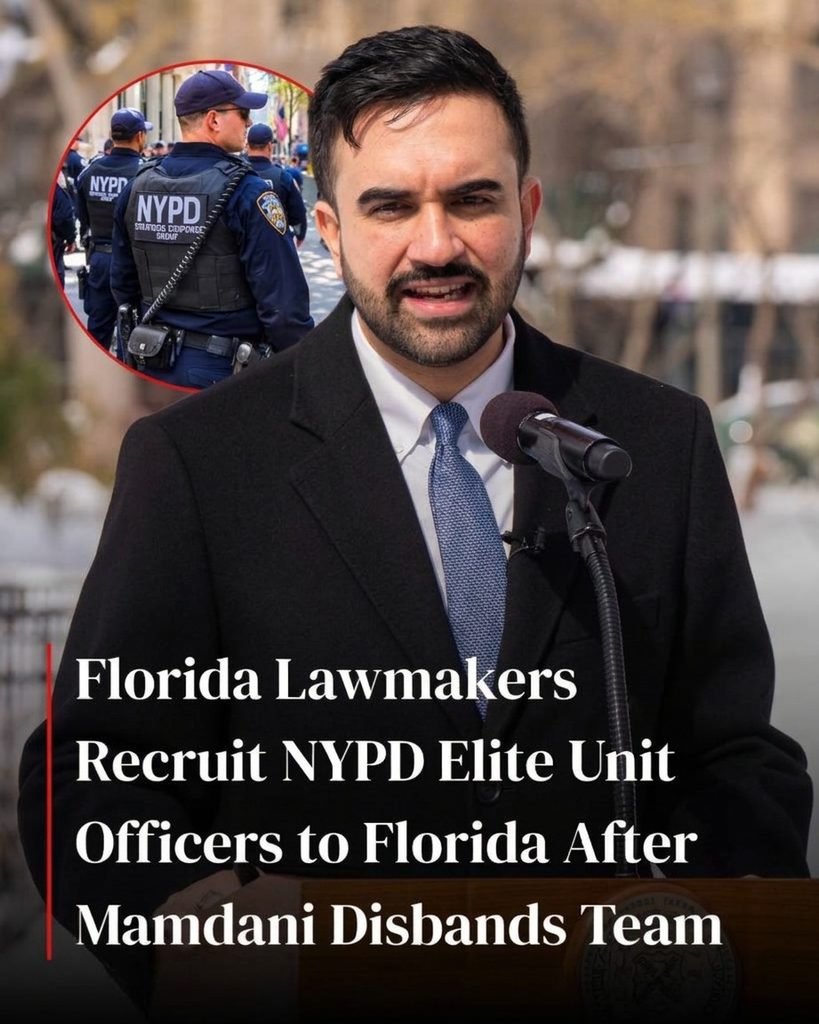
Florida lawmakers have extended an invitation to officers from the New York Police Department’s Strategic Response Group (SRG) to consider relocating to Florida following New York City’s decision to disband the specialized unit. The move has sparked renewed discussion about public safety, protest management, and how cities should handle crowd-control responsibilities.
Florida’s Recruitment Pitch to NYPD Officers
Florida Sen. Ashley Moody reportedly made the recruitment pitch on November 16, the same day New York City Mayor Zohran Mamdani and Police Commissioner Jessica Tisch announced plans to dismantle the NYPD’s Strategic Response Group. The invitation signals Florida’s interest in attracting experienced law enforcement officers who have worked in specialized operations, including managing large-scale public events and demonstrations.
The NYPD’s Strategic Response Group has been involved in handling situations requiring specialized police response, including crowd management and other operational duties. The decision to disband the unit represents a shift in how New York City plans to organize certain police responsibilities moving forward.
New York City Plans a New Approach to Protest Management
Under the announced changes, New York City intends to give trained civilian personnel a role in helping de-escalate tensions during protests. Police officers would continue to handle crowd-management responsibilities, while a separate NYPD bureau would take over counterterrorism duties. City officials are expected to reorganize responsibilities as part of the broader restructuring.
The announcement has drawn attention from political leaders outside New York, particularly in Florida, where officials have expressed interest in recruiting officers with specialized experience. Sen. Ashley Moody’s invitation reflects a broader debate over law enforcement staffing, public safety policies, and the responsibilities of police departments during demonstrations.
Debate Over Police and Civilian Responsibilities
Supporters of specialized police units argue that experienced officers are important for responding to complex situations, maintaining public order, and protecting both demonstrators and the public. Others believe civilian-led approaches to de-escalation can help reduce tensions and improve communication during protests, provided police remain available when necessary.
The debate raises an important question for cities across the United States: how should police departments and civilian teams divide responsibilities during protests? As communities continue to discuss policing strategies, the balance between public safety, peaceful demonstrations, de-escalation, and accountability remains a central issue.
Florida’s invitation to NYPD officers comes at a time when cities are reconsidering how specialized law enforcement teams should operate and whether alternative approaches can effectively manage public demonstrations.