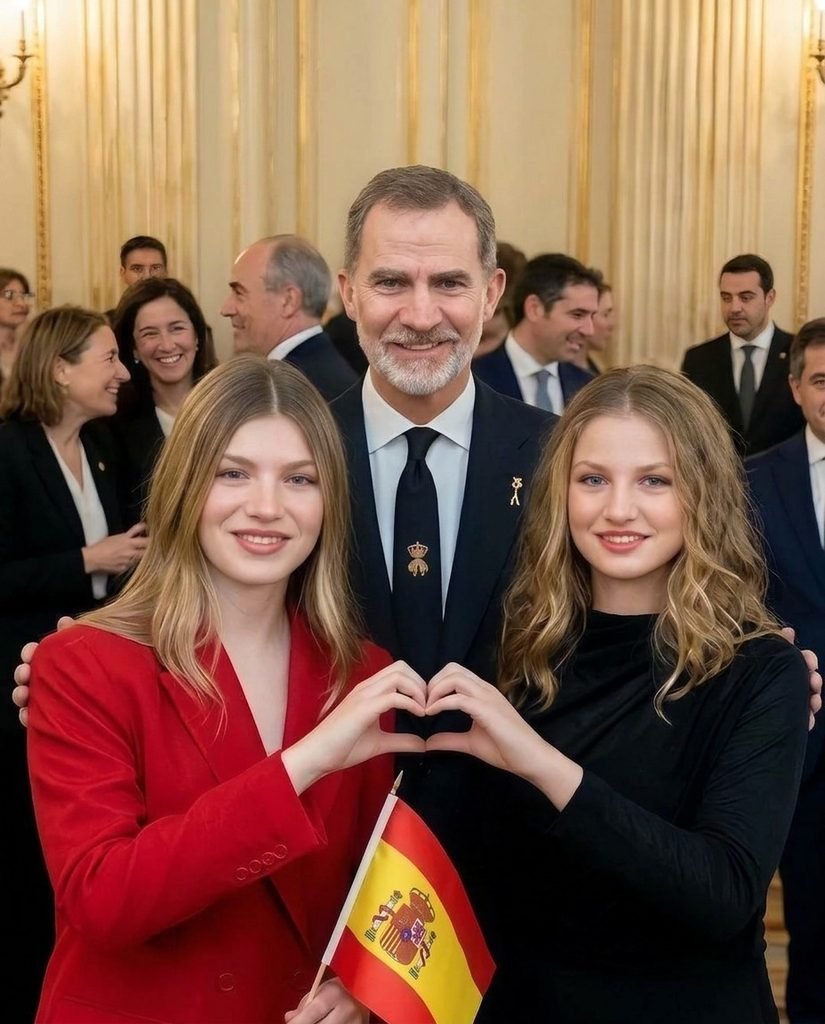
As the elder daughter of King Felipe VI and Queen Letizia, Princess Leonor of Bourbon stands at the center of Spain’s modern monarchy. Still in her early twenties, she is preparing to become Spain’s first queen regnant since Queen Isabella II, who reigned in the 19th century.
Her position is far more than symbolic. Under the Spanish Constitution of 1978, Princess Leonor holds specific legal responsibilities, historic titles, and a rigorous path of public and military preparation designed to ready her for the throne.
What Does the Title “Princess of Asturias” Mean?
When King Felipe VI ascended the throne in June 2014, Leonor—then just eight years old—automatically became the Princess of Asturias (Princesa de Asturias).
This title is the official designation for the direct heir to the Spanish Crown, similar to how the heir to the British throne holds the title “Prince of Wales.” Its roots stretch back more than 600 years to 1388, when King John I of Castile created the Principality of Asturias for his son, Henry, to secure royal succession and unite rival dynasties.
Along with being the Princess of Asturias, Leonor also carries several other historic titles representing the former kingdoms that unified to form modern Spain:
Princess of Girona (representing the Crown of Aragon)
Princess of Viana (representing the Kingdom of Navarre)
Duchess of Montblanc, Countess of Cervera, and Lady of Balaguer
Together, these titles symbolize the historical unity and continuity of the Spanish nation.
Her Constitutional Role Under Spanish Law
Spain is a parliamentary monarchy, meaning the monarch serves as the Head of State and a symbol of national unity, while the elected government runs day-to-day political affairs. Within this framework, the Spanish Constitution of 1978 clearly defines Princess Leonor’s role as heir apparent:
Direct Line of Succession: Under Article 57 of the Constitution, Leonor is first in line to the throne. While Spain’s constitution still technically retains male-preference primogeniture, King Felipe VI and Queen Letizia have two daughters—Leonor and her younger sister, Infanta Sofía—making Leonor’s position as heir undisputed.
The Oath of Allegiance at Age 18: One of the most significant constitutional milestones in Leonor’s life occurred on October 31, 2023, her 18th birthday. In a solemn ceremony before the Cortes Generales (the Spanish Parliament), she swore an oath to faithfully carry out her duties, uphold the Constitution and the laws, respect the rights of citizens and Spain’s autonomous communities, and remain loyal to the King.
Eligibility for Regency: By taking this constitutional oath upon reaching adulthood, Leonor became legally eligible to serve as Regent—stepping in to fulfill the duties of Head of State if the King were ever incapacitated or unable to perform his role.
Preparing to Become Future Captain-General
Because the Spanish monarch also serves as the Supreme Commander of the Armed Forces (holding the rank of Captain-General), the heir to the throne must undergo comprehensive military training.
Following her graduation from UWC Atlantic College in Wales, Princess Leonor began a three-year military education program modeled after her father’s own training:
The Army: Training at the General Military Academy in Zaragoza.
The Navy: Training at the Naval Military School in Marín, including a voyage aboard the historic training ship Juan Sebastián de Elcano.
The Air and Space Force: Completing her final year at the General Air Academy in San Javier.
Representing a Modern Monarchy
Beyond legal duties and military academies, Princess Leonor increasingly represents Spain at major state ceremonies, international visits, and the annual Princess of Asturias Awards—one of the world’s most prestigious honors celebrating achievements in science, arts, literature, and humanities.
With poise, multilingual fluency, and a deep sense of constitutional duty, Princess Leonor bridges centuries of royal tradition with the expectations of a modern European democracy—stepping steadily toward the day she will wear the Spanish Crown.