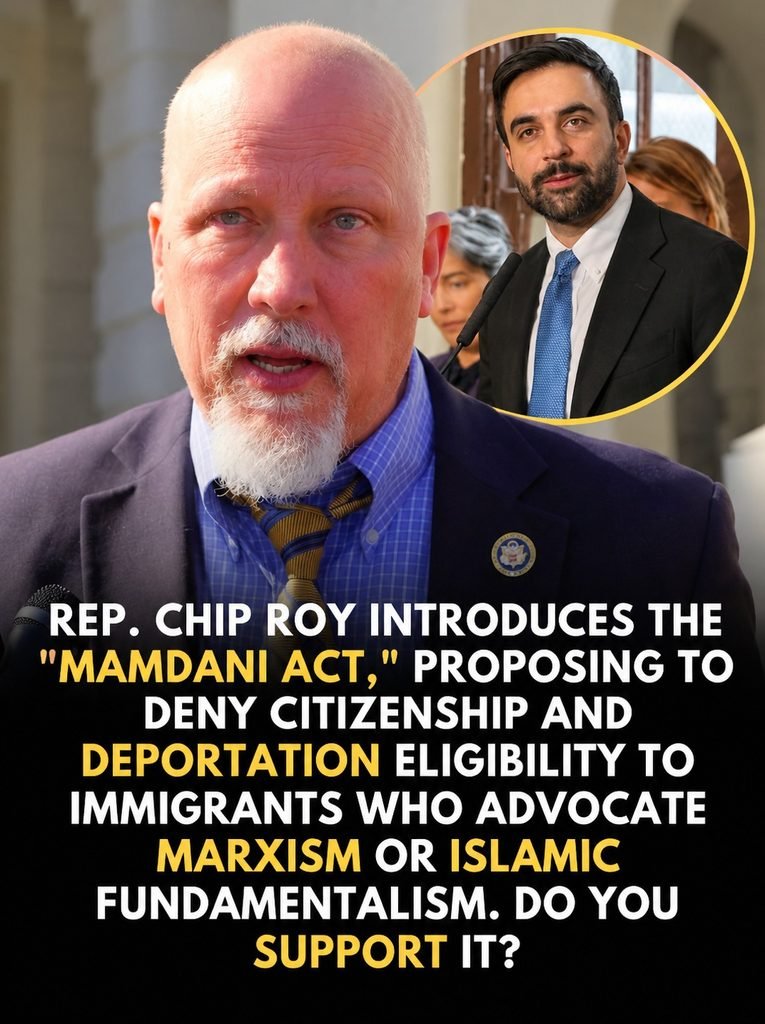
A controversial new immigration proposal is creating a major political debate in Washington, D.C., after Republican Congressman Chip Roy introduced legislation that could dramatically expand the grounds for denying immigration benefits and removing certain noncitizens from the United States.
Known as the MAMDANI Act of 2026, the proposal seeks to change existing immigration laws by targeting individuals associated with socialist, communist, Chinese communist, Marxist or Islamic fundamentalist parties, organizations and ideologies.
The legislation has attracted attention because of its potentially far-reaching consequences for immigrants seeking to enter the United States, obtain citizenship or maintain their legal immigration status.
But what exactly does the bill propose, why has it been introduced, and why are critics concerned about its potential impact?
Here is everything to know about the controversial proposal.
What Is the MAMDANI Act of 2026?
The MAMDANI Act stands for the Measures Against Marxism’s Dangerous Adherents and Noxious Islamists Act of 2026.
Republican Representative Chip Roy of Texas introduced the legislation on April 20, 2026, as House Resolution 8387.
According to the bill’s official description, its purpose is to amend the Immigration and Nationality Act and expand restrictions involving admission, naturalization, deportation and denaturalization.
The proposal specifically addresses individuals who are members of, affiliated with, or advocate for certain political parties, organizations or doctrines.
These include socialist, communist, Chinese communist, Marxist and Islamic fundamentalist movements.
The bill was referred to the House Committee on the Judiciary following its introduction. It has not become law.
Why Did Chip Roy Introduce the Bill?
Representative Chip Roy argues that the United States should not provide immigration benefits to individuals whose political affiliations or beliefs he considers incompatible with the country’s constitutional system.
In announcing the proposal, Roy argued that immigration policy should prioritize national security, American workers and the protection of the nation’s institutions.
He also criticized what he described as weaknesses in existing immigration laws that could allow individuals associated with hostile political movements to enter or remain in the country.
The congressman has presented the legislation as an effort to strengthen immigration screening and give federal authorities additional powers to address organizations and ideologies he considers dangerous.
However, the proposal has also raised questions about how broadly the government could interpret political advocacy and organizational membership.
What Could Happen to Immigrants Under the Proposed Legislation?
One of the most significant aspects of the MAMDANI Act is its proposed expansion of immigration restrictions.
If enacted, the legislation would introduce additional grounds for denying admission to certain noncitizens and preventing eligible applicants from obtaining naturalized citizenship.
It would also expand the circumstances under which certain immigrants could face deportation.
Another major provision concerns denaturalization, which is the legal process of revoking citizenship previously obtained through naturalization.
The proposal would expand the grounds for such proceedings involving individuals connected to the specified political movements.
Importantly, these are proposed changes, not rules currently in effect.
The Bill Targets More Than Party Membership
The legislation goes beyond simply addressing formal membership in political parties.
Its language also covers certain forms of advocacy, organizational affiliation and written or electronic materials associated with the specified ideologies.
This is one of the most controversial elements of the proposal.
Under its proposed provisions, certain activities involving the writing, publishing, distributing or circulating of material advocating the listed doctrines could become relevant to immigration enforcement decisions.
The legislation also seeks to expand existing restrictions involving naturalization and deportation.
Because the proposal uses broad categories of political and ideological activity, questions have emerged about how federal authorities would interpret and apply its provisions.
Why Is the Legislation Called the MAMDANI Act?
The name of the legislation has attracted almost as much attention as its immigration provisions.
The acronym MAMDANI comes from the full title of the bill, but it also references Zohran Mamdani, the New York City political figure after whom the proposal was named.
The naming reflects the political debate surrounding socialism, progressive politics and immigration in the United States.
Roy and other supporters have used the legislation to highlight their opposition to political movements they believe threaten American institutions.
However, the connection between the bill’s name and Mamdani has also made the proposal a subject of wider political discussion.
Supporters Say National Security Must Come First
Supporters of the MAMDANI Act argue that the United States has the authority and responsibility to establish strict immigration requirements.
They believe the government should be able to deny entry or immigration benefits to individuals associated with organizations that threaten national security or promote extremist political movements.
From their perspective, immigration is a privilege that comes with legal requirements, and the country should have stronger tools to protect its institutions.
Supporters also argue that the proposal would close weaknesses in existing immigration law and strengthen the government’s ability to respond to ideological threats.
Critics Warn About Political Freedom and Constitutional Rights
Despite support from some conservative lawmakers, the proposal has raised concerns about the relationship between immigration enforcement and freedom of expression.
Critics argue that broad definitions of political advocacy and ideological affiliation could create difficult questions about how ordinary political speech would be treated.
For example, political discussions, written opinions, academic research and peaceful advocacy can involve controversial ideologies without necessarily representing support for violence or unlawful activity.
Opponents are concerned that the proposed language could give government authorities considerable discretion when making immigration decisions.
Another major concern involves provisions making certain determinations final and not subject to judicial review.
Critics argue that limiting access to court review could make it more difficult for affected individuals to challenge government decisions.
These concerns have made the legislation part of a broader debate about balancing national security with constitutional protections and individual rights.
What Happens Next for the MAMDANI Act?
As of November 2026, the MAMDANI Act remains a proposed piece of legislation rather than an enacted federal law.
After its introduction on April 20, 2026, the bill was referred to the House Committee on the Judiciary.
For the proposal to become law, it would need to advance through the legislative process, pass the House and Senate, and receive presidential approval.
Until that happens, the proposed changes do not automatically become part of America’s immigration system.
The bill’s future will depend on congressional support, committee consideration and the wider political debate surrounding immigration policy.
A Major Debate Over America’s Immigration Future
The MAMDANI Act of 2026 has brought an important question back into the national conversation: how far should the government go when deciding who can enter, remain in or become a citizen of the United States?
For supporters, the legislation represents a stronger approach to national security and immigration enforcement.
For critics, its broad language raises concerns about political expression, due process and the possibility of government overreach.
Whatever happens next, the proposal has already become part of a significant debate about the future of American immigration policy.
As Congress considers the legislation, the central challenge will be determining how to protect national security while respecting the rights and freedoms that remain fundamental to the American constitutional system