Your feet do more than carry you from one place to another.
Changes in their appearance, temperature, sensation, or comfort can sometimes provide clues about your overall health.
Here are nine foot symptoms you should never ignore.
Most people do not pay much attention to their feet until something starts to hurt.
A little swelling after a long day, tingling in the toes, or unusually cold feet may seem harmless at first.
Sometimes, these symptoms are caused by everyday factors such as tight shoes, prolonged standing, or physical activity.
In other cases, persistent or unexplained changes may be associated with conditions affecting the nerves, blood circulation, skin, or joints.
Recognizing unusual symptoms early can help you decide when to seek medical advice.
Here are nine foot symptoms worth paying attention to and what they might mean.
1. Persistent Swelling in Your Feet or Ankles
Have you noticed that your feet or ankles look puffier than usual, particularly toward the end of the day?
Mild swelling can occur after standing or sitting for long periods. Warm weather and certain medications can also contribute to fluid buildup.
However, persistent swelling may sometimes be associated with problems involving the veins, kidneys, liver, or heart.
When to seek help: Arrange a medical assessment if swelling keeps returning, lasts several days, or has no clear explanation.
Sudden swelling in one leg, particularly with pain, warmth, or redness, needs urgent medical evaluation because it can indicate a blood clot.
If swelling is accompanied by chest pain or difficulty breathing, seek emergency medical care.
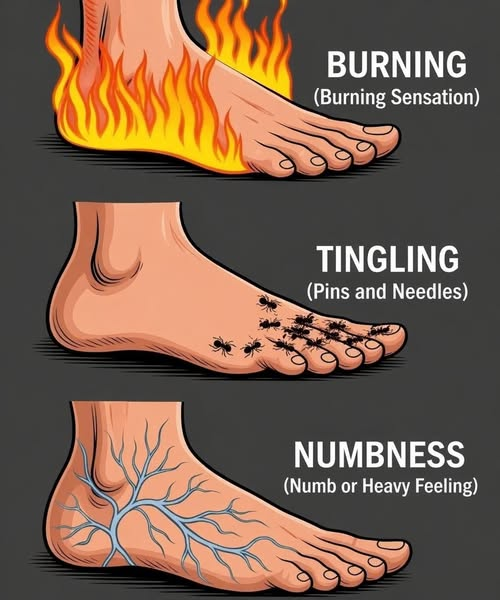
2. Tingling or Numbness in Your Toes
A pins-and-needles sensation can happen when you sit awkwardly or wear shoes that put pressure on your feet.
But if your toes frequently feel numb, tingly, or unusually insensitive, the cause may involve irritated nerves or a condition known as peripheral neuropathy.
Diabetes is one possible cause of peripheral neuropathy. Vitamin deficiencies, certain medications, alcohol-related nerve damage, and other medical conditions can also contribute.
Why it matters: Reduced sensation may make it harder to notice cuts, blisters, burns, or injuries.
If numbness persists, spreads, or repeatedly returns, consult a healthcare professional. Sudden numbness accompanied by weakness or difficulty walking requires emergency assessment.
3. Feet That Feel Unusually Cold
Cold feet are common in chilly environments and do not automatically indicate a health problem.
However, feet that remain cold even in comfortable temperatures may sometimes be associated with circulation problems, nerve conditions, or an underactive thyroid.
Pay attention to other changes, including skin discoloration, pain while walking, or wounds that heal slowly.
When to seek help: If one foot suddenly becomes much colder than the other, especially with severe pain, pale or blue skin, or numbness, seek emergency care. These can be warning signs of a serious interruption in blood flow.
Persistent cold feet without emergency symptoms should be discussed with your healthcare provider.
4. Burning Sensation in Your Feet
A burning feeling in the soles or toes can be uncomfortable, especially at night.
Possible causes include nerve irritation, peripheral neuropathy, certain vitamin deficiencies, and skin conditions such as athlete’s foot.
Tight footwear and prolonged activity may also contribute.
The location and accompanying symptoms can offer useful clues.
For example, burning accompanied by itching, peeling, or cracked skin may suggest a fungal infection, while burning with numbness may indicate a nerve-related problem.
What to do: Avoid shoes that squeeze your toes, keep your feet clean and dry, and seek medical advice if the sensation persists or worsens.
Do not assume that burning feet automatically mean you have diabetes. Proper evaluation is needed to identify the cause.
5. Slow-Healing Cuts or Sores
A small blister or cut usually heals without difficulty. But a wound that remains open, becomes increasingly painful, or shows little improvement deserves attention.
Slow-healing foot wounds can be associated with poor circulation, diabetes, infection, or reduced sensation that allows repeated injury.
Warning signs of infection include spreading redness, warmth, increasing swelling, pus, and fever.
When to seek help: If you have diabetes, reduced foot sensation, or known circulation problems, contact your healthcare provider promptly about any new foot wound. Do not wait for it to become painful, because nerve damage can reduce the sensation of pain.
A wound that develops spreading redness, drainage, or other signs of infection should be assessed urgently.
6. Changes in Toenail Color or Thickness
Healthy toenails are generally smooth and relatively uniform in color. Changes such as yellowing, thickening, crumbling, or separation from the nail bed may indicate a fungal infection.
Injuries and repeated pressure from shoes can also change a nail’s appearance. Certain skin conditions may affect the nails as well.
A dark streak beneath a toenail can result from bruising, but an unexplained streak that does not grow out with the nail, widens, or changes in appearance should be examined by a healthcare professional to rule out more serious causes.
What to do: Avoid diagnosing a nail condition based on appearance alone. A clinician can determine whether testing or treatment is necessary.
7. Pain in Your Feet When Walking
Foot pain can develop after exercise, from uncomfortable footwear, or because of conditions affecting muscles, tendons, bones, and joints.
However, pain that repeatedly occurs in the calves or feet while walking and improves with rest can sometimes indicate peripheral artery disease, a condition in which narrowed arteries reduce blood flow to the legs.
Other possible signs include leg fatigue, weak pulses, or wounds that heal slowly.
When to seek help: Make an appointment if walking-related pain keeps returning or limits your normal activities. Sudden, severe foot pain with coldness, discoloration, or numbness requires emergency care.
Do not assume that recurring pain is simply a normal part of getting older.
8. Redness, Warmth, or Unexplained Swelling
A red, warm, swollen foot may result from an injury, an inflamed joint, gout, or a skin infection.
The combination of symptoms matters. For example, a sudden, intensely painful, red joint near the base of the big toe can occur during a gout attack. Redness that spreads across the skin with increasing warmth and tenderness may indicate an infection.
People with diabetes or reduced sensation should be especially cautious about new redness or swelling.
When to seek help: Obtain prompt medical attention for unexplained redness, warmth, or swelling, particularly if the symptoms are worsening. Fever, rapidly spreading redness, or severe pain increases the urgency.
A hot, swollen foot in someone with diabetes may require urgent assessment even when pain is mild.
9. Persistent Dry, Cracked, or Peeling Skin
Dry skin on the heels is common and may be caused by weather, frequent washing, or prolonged pressure. However, persistent peeling, itching, or cracking between the toes can also be a sign of athlete’s foot.
Deep heel cracks can become painful and may provide an entry point for infection. Dryness can also accompany certain skin conditions or, in some cases, other underlying health issues.
What to do: Apply a suitable moisturizer to dry skin, wear well-fitting footwear, and keep the spaces between your toes dry. Avoid applying thick moisturizer between the toes if the area is already damp or affected by a suspected fungal infection.
Seek medical advice if the skin becomes increasingly painful, bleeds, shows signs of infection, or fails to improve with basic care.
How to Keep Your Feet Healthy
You do not need an elaborate routine to take better care of your feet. A few simple habits can help you notice problems early and reduce the risk of injury.
- Check your feet regularly: Look at the soles, heels, and spaces between your toes for cuts, blisters, swelling, or color changes.
- Choose comfortable footwear: Shoes should provide enough room for your toes and should not cause rubbing or pressure.
- Keep your feet clean and dry: Wash them regularly and dry carefully between the toes.
- Stay physically active: Regular movement supports general health and can help maintain circulation.
- Manage chronic conditions: Follow your healthcare professional’s advice if you have diabetes or a condition affecting blood circulation.
- Avoid ignoring persistent symptoms: Recurring pain, numbness, swelling, or wounds deserve proper evaluation.
When Should You See a Doctor?
Not every foot symptom signals a serious disease. The important factors are how suddenly it begins, how severe it is, whether it persists, and what other symptoms occur alongside it.
Seek emergency care for a suddenly cold, pale or blue foot; severe unexplained pain; or foot symptoms accompanied by chest pain, difficulty breathing, or sudden neurological changes.
Arrange prompt medical assessment for persistent swelling, unexplained numbness, recurring pain while walking, wounds that do not heal, or signs of infection.
If you have diabetes, circulation problems, or reduced sensation in your feet, even seemingly minor changes may deserve earlier attention.
Final Thoughts
Your feet can sometimes provide early clues that something needs attention, but no single symptom can diagnose a medical condition.
Cold feet do not automatically mean poor circulation, burning feet do not necessarily indicate diabetes, and nail discoloration does not always mean infection. The same symptom can have several different causes.
The best approach is to notice changes, avoid self-diagnosis, and seek medical advice when symptoms are persistent, unexplained, or severe.
Your feet support you every day. Paying attention to them is a simple but important part of looking after your overall health.
