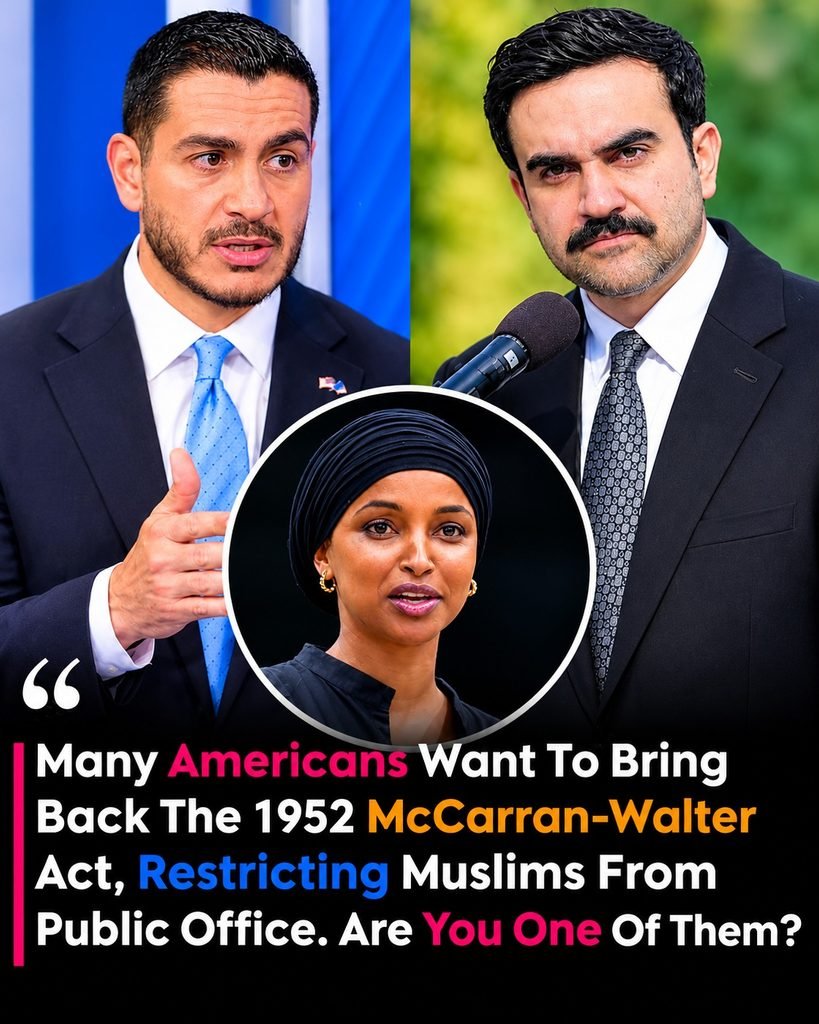
A controversial debate about immigration, religion, and political representation in the United States has brought renewed attention to a historic piece of legislation: the 1952 McCarran-Walter Act. More than seven decades after its passage, the law is once again being discussed as Americans debate immigration policy, religious freedom, and the rights of Muslim citizens.
The discussion has raised an important question: Did the United States once have a law that prevented Muslims from serving in public office, and could such restrictions ever return?
To understand the debate, it is important to look at what the legislation actually said, why it was introduced, and how it relates to the constitutional protections that remain in place today.
What Was the 1952 McCarran-Walter Act?
The McCarran-Walter Act, officially known as the Immigration and Nationality Act of 1952, was signed into law by President Harry S. Truman on June 27, 1952.
The legislation reorganized America’s immigration and nationality laws during the Cold War, a period when concerns about communism, national security, and foreign political influence were major issues in American politics.
Among its provisions, the law maintained a national-origins quota system for immigration while establishing rules governing admission, exclusion, naturalization, and deportation.
It also removed certain racial restrictions on naturalization, allowing people from Asian countries to become naturalized American citizens, although immigration quotas and other restrictions remained.
The legislation gave the federal government significant authority over immigration decisions, particularly involving individuals considered connected to certain political movements.
However, one important distinction must be understood: the McCarran-Walter Act did not prohibit Muslims from running for or holding public office simply because of their religion.
Does American Law Allow Muslims to Hold Public Office?
The United States Constitution provides an important protection against religious discrimination in government positions.
Article VI of the Constitution states that no religious test shall ever be required as a qualification for any office or public trust under the United States.
This provision establishes that religious belief cannot be imposed as a qualification for federal public office.
In addition, the First Amendment protects freedom of religion and prevents the government from establishing an official religion or prohibiting the free exercise of religion.
Together, these constitutional protections form an important foundation for religious freedom and political participation in America.
Muslim Americans, like Americans of other religious backgrounds, can participate in elections, seek public office, and serve their communities under the applicable constitutional and legal requirements.
Why Has the 1952 Law Become a Topic of Debate Again?
The renewed discussion reflects broader disagreements about immigration, national security, religious identity, and America’s political future.
Some Americans believe immigration laws should be strengthened to protect national security and ensure that individuals entering the country respect American laws and constitutional principles.
Others warn that proposals targeting particular religious groups could undermine religious freedom, equality, and the constitutional rights of American citizens.
The debate becomes especially sensitive when immigration restrictions are discussed alongside religious identity. Critics argue that treating an entire religious community as a potential security concern risks encouraging discrimination rather than addressing individual conduct.
Supporters of stronger immigration enforcement, meanwhile, emphasize the government’s responsibility to protect national security while maintaining effective immigration screening procedures.
The Difference Between Immigration Restrictions and Religious Discrimination
One of the most important issues in this debate is the difference between regulating immigration and restricting the rights of citizens.
The federal government has authority to establish immigration rules, determine eligibility for entry, and enforce immigration laws within constitutional limits.
However, those powers do not mean that a person’s religious identity automatically disqualifies them from participating in American democracy.
A person seeking to immigrate to the United States is subject to immigration requirements, while a naturalized citizen generally enjoys the same constitutional protections as other American citizens.
This distinction is essential when discussing historical immigration legislation and modern political proposals.
What Does This Mean for America’s Political Future?
The discussion surrounding the McCarran-Walter Act highlights a much larger question about the balance between national security and individual liberty.
America’s political system is built around constitutional principles that protect religious freedom and establish rules for participation in public life.
As immigration and national security continue to influence political discussions, lawmakers face the challenge of creating policies that address genuine security concerns without undermining fundamental constitutional protections.
The history of the 1952 McCarran-Walter Act also serves as a reminder that immigration laws can have lasting effects on society and that understanding their actual provisions is essential before drawing conclusions about their impact.
Ultimately, the Constitution’s protection against religious tests remains a significant safeguard for America’s democratic system.
Should religious identity ever influence someone’s ability to serve in public office, or should that decision be based entirely on constitutional qualifications and the will of voters? The debate continues.