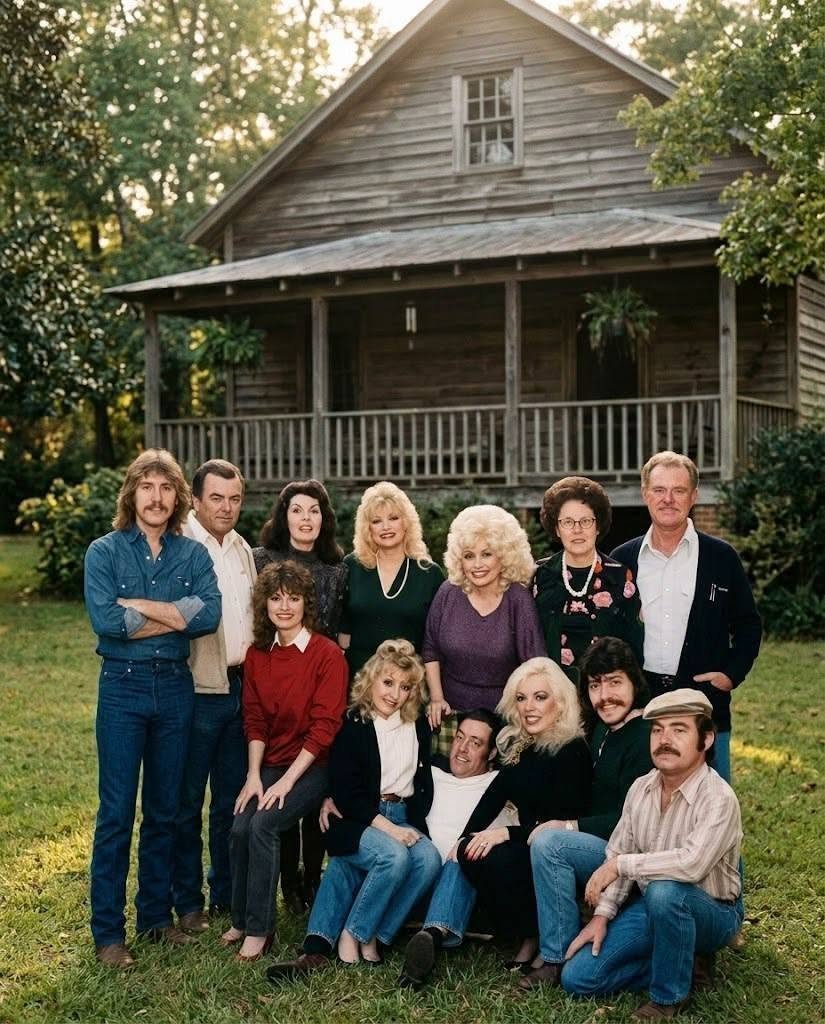
Behind every great success story, there is often someone whose sacrifices remain hidden from the world.
For country music superstar Dolly Parton, that person was her mother, Avie Lee Parton.
Long before Dolly became an internationally recognized singer, songwriter, and entertainer, she grew up in a poor Appalachian family where life was anything but easy.
Her mother raised twelve children in a small wooden cabin in the mountains of Tennessee, facing poverty, exhausting household responsibilities, and the daily struggle of keeping a large family together.
There was no modern comfort, no running water, and no electricity in their humble home.
Yet, inside that little cabin, something extraordinary was happening.
A mother was raising a family, passing down traditional music, and unknowingly helping shape one of the most influential voices in country music history.
A Young Mother With Twelve Children
Avie Lee Parton married Robert Lee Parton when she was just 15 years old.
Together, they built a large family in the Great Smoky Mountains of Tennessee.
Raising twelve children in such difficult circumstances required enormous physical and emotional strength.
Their home was a modest wooden cabin, and everyday life involved hard work from morning until night.
There were clothes to wash by hand, meals to prepare, food to preserve, and children who needed constant attention.
During the harsh Appalachian winters, providing enough food and warmth for everyone was an ongoing challenge.
Avie Lee had very little opportunity to think about herself.
Her responsibilities as a mother came first, and her own needs were often pushed aside.
Life Inside the Little Cabin on Locust Ridge
The Parton family lived in a small cabin on Locust Ridge, surrounded by the beautiful but demanding Appalachian mountains.
Although the surroundings were peaceful, their daily reality was difficult.
Without electricity or running water, even the simplest household tasks required considerable effort.
Washing clothes, preparing food, cleaning, and caring for twelve children demanded endless energy.
The family did not have the financial resources for a comfortable lifestyle.
But despite their poverty, their home was filled with something money could not buy: family connections, storytelling, faith, and music.
Those experiences would become an important part of Dolly’s identity.
The Music That Changed Dolly’s Life
One of the most beautiful things Avie Lee passed down to her children was her love of traditional Appalachian music.
Even after exhausting days of household work, she continued singing.
She shared old folk songs, traditional ballads, and melodies that had been passed through generations.
For young Dolly, her mother’s voice became her earliest musical education.
She listened carefully, absorbing the stories and emotions behind the songs.
These melodies helped develop her understanding of storytelling through music.
Dolly would eventually become famous for writing songs that connected deeply with ordinary people, particularly women who understood hardship, sacrifice, love, and family responsibilities.
Much of that emotional understanding began inside her childhood home.
How Her Mother’s Sacrifices Influenced Dolly Parton
Growing up, Dolly witnessed how much her mother gave up to care for her family.
She saw the physical exhaustion, the endless responsibilities, and the personal sacrifices that came with raising twelve children in poverty.
Those experiences left a lasting impression.
Dolly developed a deep appreciation for working-class women, mothers, and families struggling to build better lives.
Throughout her career, she often celebrated ordinary people through her music.
Her songs reflected the emotions of women whose stories were rarely given enough attention.
In many ways, the strength she witnessed in her mother became part of the emotional foundation of her songwriting.
Why Dolly Parton Chose a Different Path to Motherhood
Dolly Parton’s personal life also took a different direction from the large family in which she grew up.
She married Carl Dean in 1966, but the couple never had children.
Dolly has spoken publicly about not having children and how that allowed her to focus on her career and other interests.
Her experiences growing up in a large family also helped shape her affection for children and her desire to support future generations.
Rather than becoming a mother herself, she found meaningful ways to make a difference in the lives of millions of young people.
Turning Her Love for Children Into Something Extraordinary
One of Dolly’s most important contributions beyond music has been her work supporting children’s education.
In 1995, she established the Dolly Parton’s Imagination Library.
The program began by providing free books to children in her home county in Tennessee.
Over time, it expanded internationally, helping children develop a love of reading from an early age.
Its mission was simple but powerful: give children access to books and help them discover the joy of learning.
Dolly’s commitment to children’s literacy reflects the values she learned growing up in a family where resources were limited but love and storytelling were abundant.
Her charitable work has helped millions of children receive books and educational opportunities.
From a Small Mountain Cabin to Worldwide Fame
Dolly Parton’s journey from a poor childhood in Tennessee to international stardom is remarkable.
She became one of country music’s most successful performers, known for her distinctive voice, songwriting talent, and larger-than-life personality.
But despite her enormous success, she has never forgotten where she came from.
Her childhood experiences continue to influence her music, charitable work, and connection with ordinary families.
And behind much of that inspiration stands the woman who sang to her children in a little mountain cabin.
The Mother Behind the Legend
Avie Lee Parton may not have stood on the world’s biggest stages, but her influence reached far beyond her humble home.
She raised twelve children under difficult circumstances and passed down a musical tradition that helped inspire her famous daughter.
Her life was filled with hard work and sacrifice, but the values she taught her children became part of their greatest inheritance.
Dolly Parton’s success was built through her own extraordinary talent and determination, but her mother’s influence remained an important part of her story.
Before Dolly Parton became a global music legend, she was simply a little girl listening to her mother sing in a small wooden cabin.
And sometimes, the greatest legacy a mother leaves behind is not wealth or fame, but the dreams, values, and inspiration she passes on to her children.