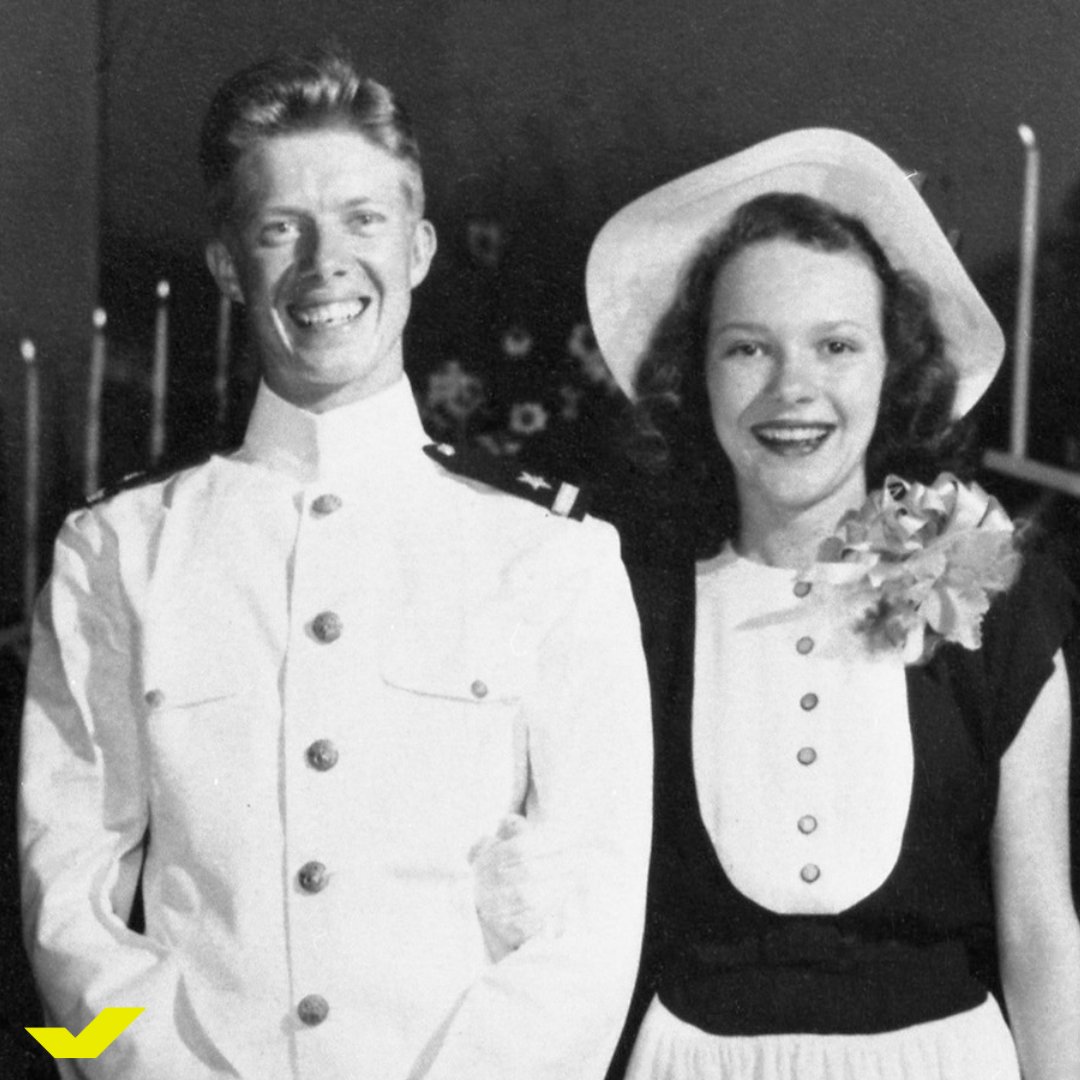
When Jimmy Carter walked out of the White House on January 20, 1981, it was the end of a presidency—but not the end of purpose. The cameras captured a quiet departure, almost understated compared to the magnitude of the office he had held. There were no grand gestures, no attempts to frame himself as larger than history. Just a man stepping back into ordinary life, holding the hand of his wife, Rosalynn Carter, as they returned to Plains, Georgia.
For most leaders, leaving the White House marks the beginning of a long afterlife of influence—book deals, speaking circuits, corporate boards, and global advisory roles. But Carter made a different decision. He chose obscurity over spotlight, labor over legacy-building, and service over status.
What followed would redefine what it means to live after power.
A Return to a Small Town With a Larger Purpose
Plains, Georgia, is not a place that demands attention. It is quiet, rural, and deeply rooted in the rhythms of everyday life. Carter had grown up there long before politics ever entered his world, and after the presidency, he returned without hesitation.
The house he moved back into was modest. Not a symbol of power, not a preserved museum of political achievement, but a home shaped by years of shared life with Rosalynn. It was here that the next chapter of his life would begin—not in offices or institutions, but in the simplest setting imaginable.
What made Carter’s return remarkable was not geography—it was intention. Many former presidents struggle with relevance after office. The world no longer revolves around their decisions. The calls stop. The urgency fades. And for some, that absence becomes unbearable.
But Carter did not try to replace influence with attention. Instead, he replaced it with action.
He began asking a different question: not “How do I stay important?” but “How do I remain useful?”
That question would lead him far beyond politics.
The Unexpected Beginning of a Global Mission
In 1984, just a few years after leaving office, Jimmy and Rosalynn Carter joined a Habitat for Humanity project in New York City. At the time, it was simply a volunteer effort. No one imagined it would become a defining global mission.
Habitat for Humanity’s idea was simple yet revolutionary: families in need of housing would work alongside volunteers to build their own homes. It was not charity in the traditional sense—it was partnership. Dignity was not given; it was built, shared, and earned through collaboration.
Carter did not arrive as a symbolic guest. He arrived as a worker.
He carried materials. He measured boards. He nailed walls. He followed instructions like everyone else on the site. There was no separation between the former president and the other volunteers. On that construction site, titles meant nothing. Effort meant everything.
Something shifted during that experience. Not publicly, not dramatically—but internally. Carter recognized that this form of service was not an event. It was a practice. A commitment. A rhythm of returning again and again to the same purpose.
That realization became the foundation of everything that followed.

The Carter Work Project: A Legacy Built Year After Year
What began as a single volunteer experience evolved into the Carter Work Project, one of the most influential humanitarian housing initiatives in the world.
Every year, Carter and Rosalynn traveled to different communities. They worked alongside volunteers from dozens of countries. Houses were built, repaired, and renovated. Families moved from instability into safety. Entire neighborhoods were strengthened through collective effort.
But what made the project extraordinary was not just scale—it was consistency.
Carter did not treat it as symbolic. He did not appear only for ceremonies or media moments. He showed up fully, year after year, regardless of age or condition.
In his seventies, he was on construction sites with the same focus as younger volunteers.
In his eighties, he still worked with tools in hand.
In his nineties, he continued to appear on job sites, often surprising those who expected him to slow down.
The image of a former president wearing work boots and holding a hammer became quietly iconic—not because it was staged, but because it was real.
Rosalynn Carter: The Quiet Strength Behind the Work
Behind every major chapter of Carter’s post-presidency life stood Rosalynn Carter. Their partnership was not decorative or ceremonial. It was foundational.
Rosalynn was not simply accompanying him; she was working alongside him. She organized, participated, supported, and shared the physical and emotional labor of the mission. Together, they formed a partnership that extended far beyond public perception.
While Jimmy Carter became the visible symbol of the Carter Work Project, Rosalynn was its emotional backbone. She understood that the work was not about building houses alone—it was about building relationships, restoring dignity, and creating stability where it had been absent.
Their marriage, already decades long by the time they left the White House, evolved into something even deeper: a shared philosophy of service.
They were not simply living together. They were working together toward something larger than themselves.
Work Without Audience, Purpose Without Performance
One of the most striking elements of Carter’s post-presidential life was how deliberately it resisted spectacle.
In modern public life, visibility often determines perceived importance. Leaders are expected to remain in the media cycle, to comment, to appear, to maintain relevance through constant presence.
Carter rejected that model entirely.
The homes built through Habitat for Humanity were not monuments to his legacy. They were not branded achievements. They were lived-in spaces for families who needed stability.
For Carter, the measure of success was not attention—it was outcome.
Did a family have shelter?
Did a child have safety?
Did a community gain strength?
Those were the metrics that mattered.
This approach quietly challenged the expectations placed on public figures. It suggested that influence does not require visibility, and that the most meaningful contributions often happen outside of public view.

Aging as a Form of Testimony
As the years passed, Carter’s continued presence on construction sites became more than service—it became testimony.
He was not simply aging in retirement. He was aging in action.
There is a powerful difference between stepping back from work and continuing work at a slower, more deliberate pace. Carter chose the second path.
He did not attempt to preserve youth. He did not try to hide aging. Instead, he continued showing up as he was—older, slower, but still committed.
In 2019, at age 95, Carter experienced a fall that required stitches. Most people assumed he would take time away from public activity. Instead, he appeared at a Habitat site the very next day, with visible bandages and a black eye.
He did not frame it as resilience or defiance. He did not make a speech about perseverance. He simply returned to work.
That moment resonated widely because it was not extraordinary in intent—it was ordinary in principle. He was doing what he had always done.
A Different Kind of Presidential Legacy
Jimmy Carter’s presidency is often discussed in political terms—economic challenges, international crises, and shifting global dynamics. But his post-presidency reframed how legacy itself is understood.
He became the longest-living president in American history, reaching 100 years of age. Yet his longevity is not what people remember most.
What stands out is what he chose to do with the decades after power.
While many former leaders remain defined by their time in office, Carter became equally defined by what came after it.
The presidency was a chapter. Not the conclusion.
In many ways, his post-White House life became more influential than his presidency itself—not because it held more authority, but because it demonstrated a different form of leadership entirely.
Leadership without command.
Influence without control.
Service without expectation of return.
The Philosophy Behind the Hammer
Carter often expressed a simple belief: that dignity is built through participation, not receipt. That belief shaped everything about his work.
On construction sites, he was not separate from the labor. He was part of it. That mattered deeply in a world where hierarchy often defines contribution.
By working alongside families, he reinforced the idea that housing is not simply delivered—it is built together. That shared effort creates shared ownership, not only of the structure but of the outcome.
In this philosophy, charity becomes collaboration. And collaboration becomes empowerment.
It is a subtle shift in perspective, but one that changes everything.
Global Reach, Local Impact
Over the decades, the Carter Work Project expanded across continents. Volunteers from dozens of countries participated. Homes were built in communities that had long struggled with poverty, displacement, or natural disaster recovery.
Yet despite its global reach, the mission remained deeply local in practice. Each home represented one family, one story, one future.
Carter understood that impact is not always measured in scale. Sometimes it is measured in depth.
A single home can change the trajectory of a family for generations.
And when multiplied across thousands of homes, that impact becomes profound.
The Final Years and Enduring Reflection
As Carter entered his final years, public reflection on his life became more unified. Regardless of political perspective, there was a growing recognition that his legacy extended far beyond the presidency.
He had become a symbol of something rare: consistency between belief and action over a lifetime.
Many leaders speak about service. Fewer sustain it when no longer required. Even fewer return to physical labor decades after holding the highest office in their country.
Carter did.
That consistency became the defining feature of his story.
Conclusion: A Legacy Built One Hammer Strike at a Time
When history remembers Jimmy Carter, it will likely remember two lives in one.
The first was the president navigating a complex era of global politics.
The second was the former president who returned to a small town, picked up a hammer, and spent decades building homes for people he would likely never meet again.
One life was defined by power.
The other was defined by service.
And while power brought him recognition, it was service that gave his life enduring meaning.
In the end, Carter’s legacy is not found in speeches or titles. It is found in the quiet strength of homes that stand because someone chose to build them.
Not for fame.
Not for reward.
But because it was the right thing to do.
And sometimes, that is the most lasting legacy of all.